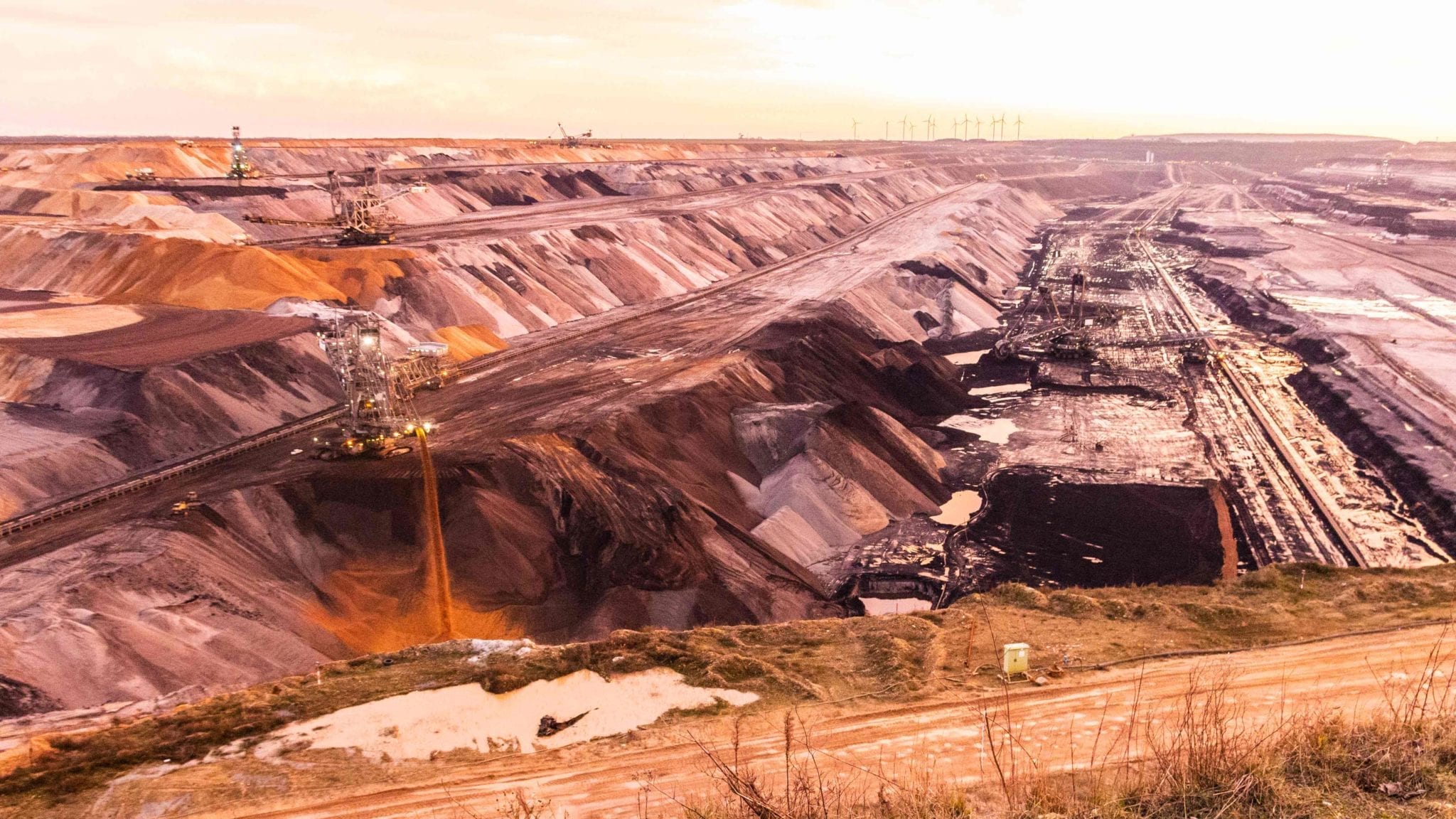
Why do you need it?
Brown coal?
Energy mix in Germany (2018)
Source: Working Group on Energy Balances e.V.
Brown coal is or was mined in numerous European countries, but also in Australia and the USA, for example. Germany is at the top of the brown coal producing countries, ahead of China and Russia.
In Germany there are three large areas with active opencast mines. The Central German lignite mining area near Leipzig, the Lusatian lignite mining area near Cottbus and the Rhenish lignite mining area near Cologne and Düsseldorf.
The Rhenish lignite mining area
Select locations on the map · Historical planning status · Move map sideways

All locations and times as a list
Garzweiler II is scaled down twice

On August 17, 1987 Rheinbraun AG (now incorporated into RWE Power AG) has applied for the continuation of the Garzweiler II opencast mine: Garzweiler II. The planned mining area included 19 towns and several individual farms. In September 1991 In a policy decision, the then state government of North Rhine-Westphalia reduced the opencast mining area by 27%. The towns of Wanlo, Venrath, Kaulhausen, Terheeg, Wockerath and Kückhoven were spared. In a second policy decision 2016 In another policy decision, the red-green state government under Hannelore Kraft once again reduced the size of the opencast mine. Now Holzweiler, Dackweiler and the Hauerhof have been removed from the opencast mining planning. (map from 2000)
Temporal overview of opencast mine Garzweiler II
August 1985
Planning
Rheinbraun AG (later RWE) is applying for approval of the “Garzweiler II” opencast mine. The original plan was to relocate 19 towns, but this was subsequently reduced to 12 towns.March 31, 1995
Approval
The lignite committee at the district government is developing the lignite plan Garzweiler II - among other things, the social compatibility of resettlements is examined in reports and is taken for granted. In March 1995, Garzweiler II is approved by the Ministry of Environment NRW.1997
Start of resettlements
The first resettlements for the Garzweiler II opencast mine began in 1997. The affected areas were Otzenrath, Spenrath and Holz, which were relocated to a common location near Hochneukirch. The resettlement lasted until 2006, and the opencast mine reached the former local locations within the next two years.July 2006
Second resettlement phase
In the second section of the Umisedlungs, the locations Pesch, Immerath and Lützerath were affected, as well as Borschemich in another procedure. The relocation for all locations began in 2006 and ended for Pesch in 2009 and for Borschemich in 2015. Immerath and Lützerath are currently still being relocated, although Immerath has now been almost completely demolished.December 2016
Third resettlement phase
On December 1, 2016, the joint relocation of the locations Keyenberg (demolition by 2023), Kuckum, Oberwestrich, Unterwestrich (demolition by 2027) and Berverath (demolition by 2028) began. New Keyenberg will be built north of Erkelenz for the population of these places.
Entire highways are being relocated
Largest employer in the region


 2018
 2000
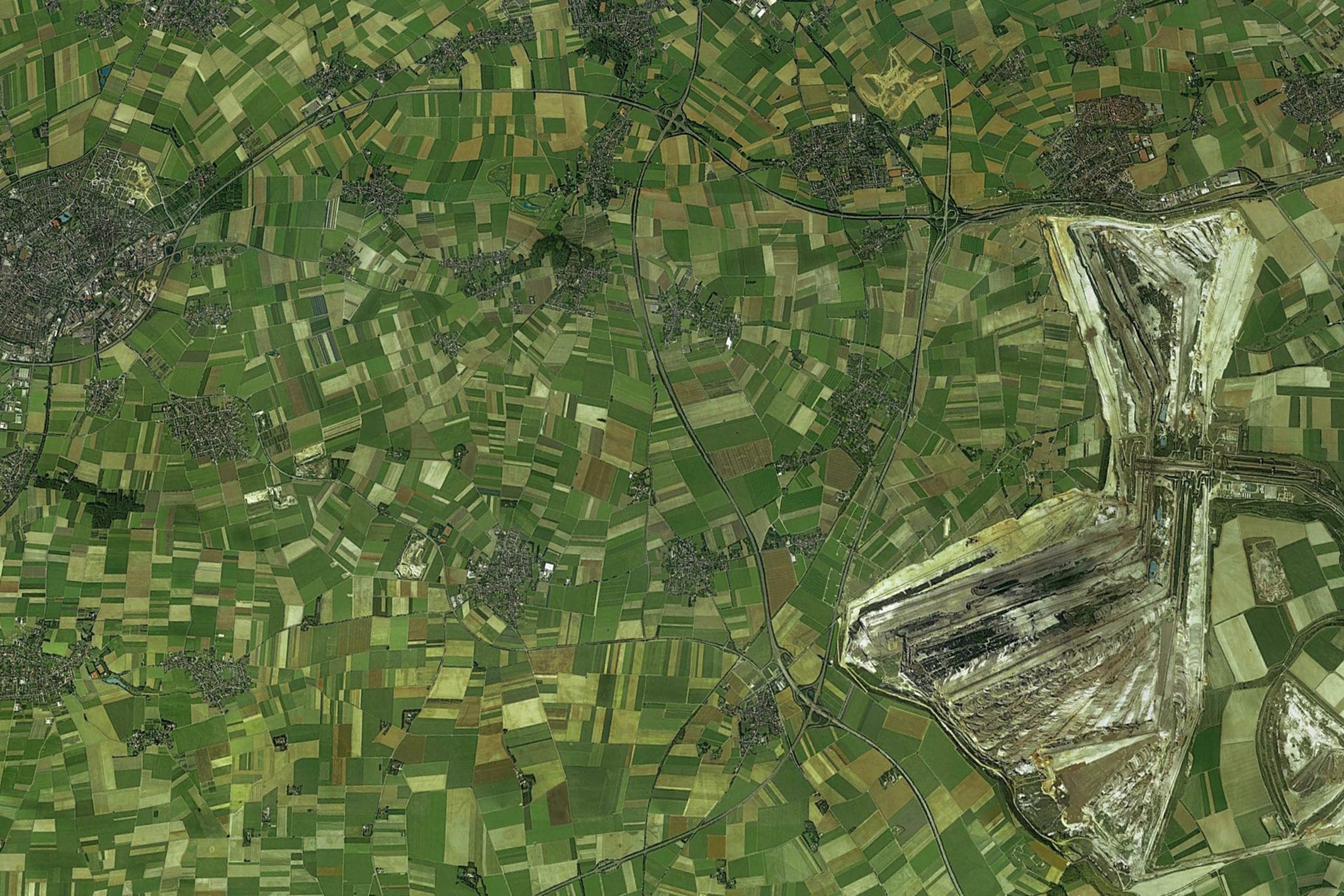
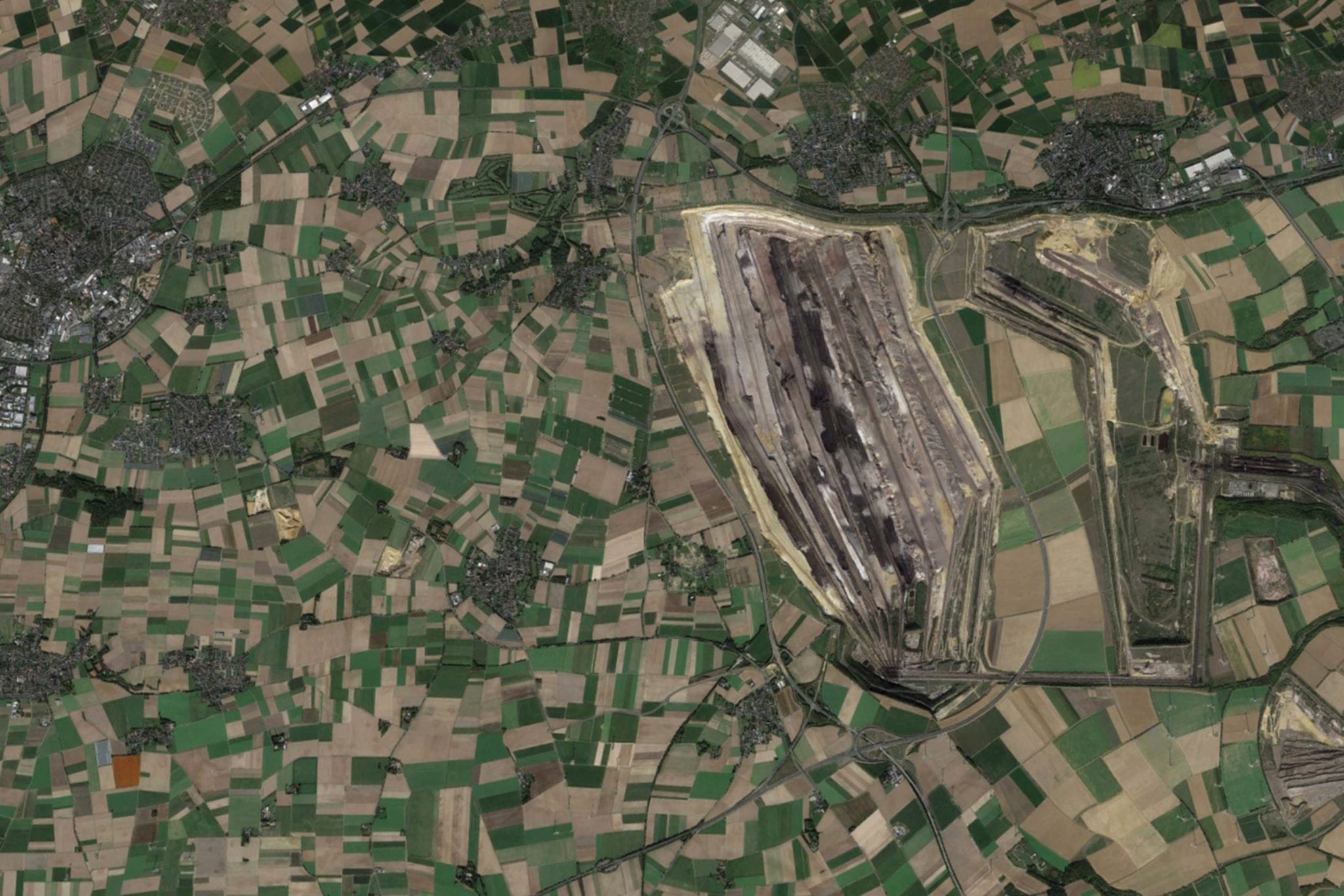
What is brown coal used for?


The opencast mine is moving
Select locations on the map · Historical planning status · Move map sideways

All locations and times as a list
Residual lake
After coal production ends in 2045, there will be a remaining hole because the mined coal will not provide enough mass to completely fill the opencast mine. From 2025, a 27 kilometer long pipeline will be built from the Rhine to the remaining hole so that the opencast mine can be filled with Rhine water and a lake will be created. Filling this lake will take around forty years and will be completed around the year 2085.

More images from the original page